
Introduction
The machete is an essential tool in global agriculture and landscaping. For B2B buyers, sourcing involves more than finding a sharp blade. You must understand tool ergonomics and customization potential. Cost-effective procurement strategies are also a key part of the job. This guide explores how to select a professional supplier for large operations.
The Importance of Tool Quality in Large Projects
Large farms cannot afford tool failures. A broken blade means a worker is idle. High-quality tools ensure that your projects stay on schedule and under budget.
Designing for Performance: The Importance of Machete Ergonomic Handles
User fatigue is the main enemy of productivity when clearing land. A machete’s performance depends heavily on its grip. The machete best design for ergonomic handle mimics the natural curve of the hand. Modern makers use high-impact polypropylene or textured rubber over-molds. These provide a non-slip surface, even in humid conditions.
Selecting Non-Slip Materials
A good grip is vital for worker safety. Rubber over-molds are excellent for wet environments. They reduce the risk of the tool slipping during heavy use.
Safety Features in Handle Design
An ergonomic handle should have a “flare” or “D-ring” guard. This prevents the tool from slipping out of the hand during fast swings. Providing tools that reduce injury risk is very important for B2B clients. It helps maintain a consistent workforce output. Test handle samples for balance and weight distribution before buying.
Building Your Brand: Machete Factory OEM and Custom Logo Services
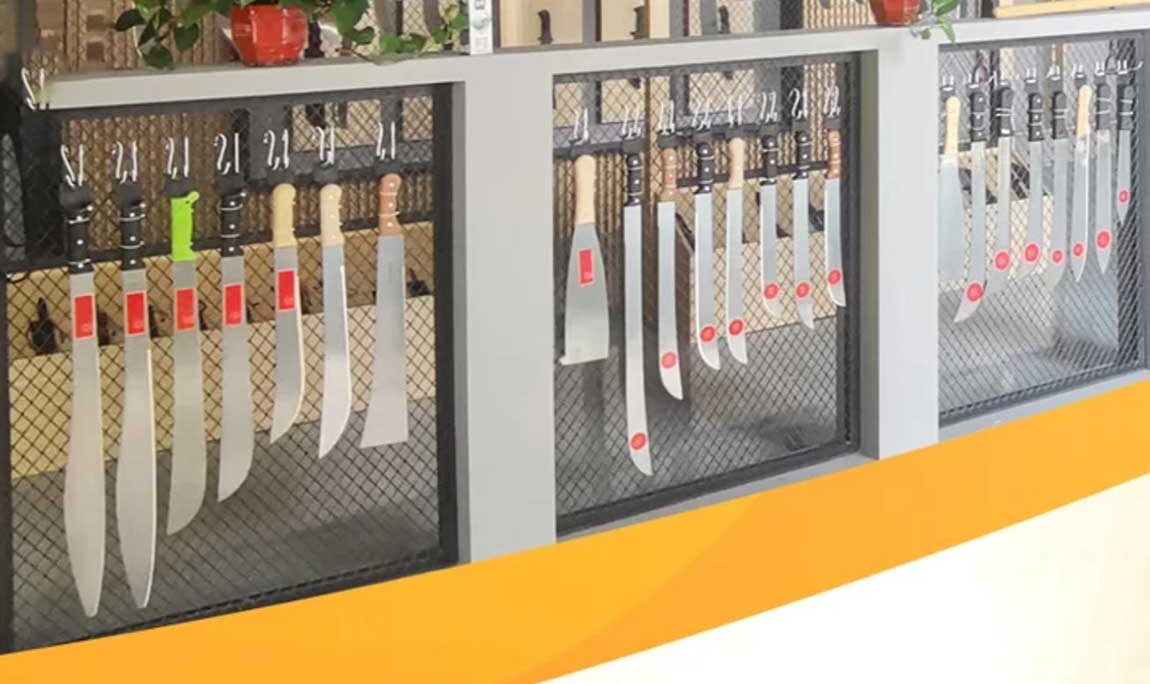
Differentiation is key to market share for wholesalers and retail brands. Partnering with a machete factory OEM custom logo supplier is a great idea. It lets you build brand equity without owning a factory. Professional Chinese factories offer many OEM services today. These include laser etching for logos and custom blade coatings. You can choose black oxide or powder-coated finishes for your products.
Protecting Your Intellectual Property
When developing a custom brand, ensure your logo and designs are protected. Work with suppliers who respect your intellectual property rights. This secures your position in the market for the long term.
Customizing for Regional Needs
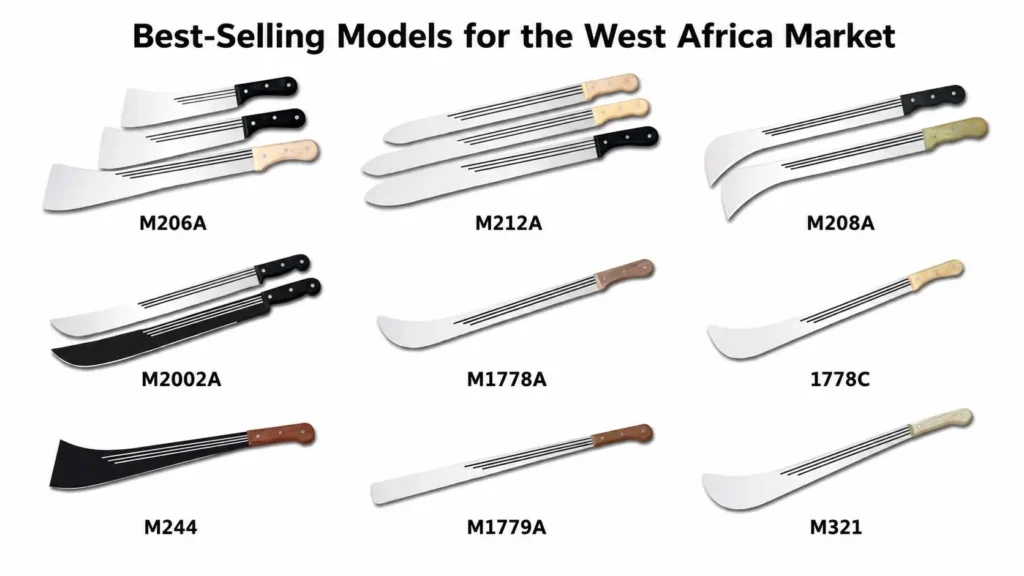
A true OEM partner helps you modify blade thickness or steel grade. 65Mn carbon steel is the most common choice. Customization ensures your brand stands for quality in your local market. It helps foster long-term customer loyalty.
Maximizing ROI: The Cheapest Machete Options for Farmland Clearing
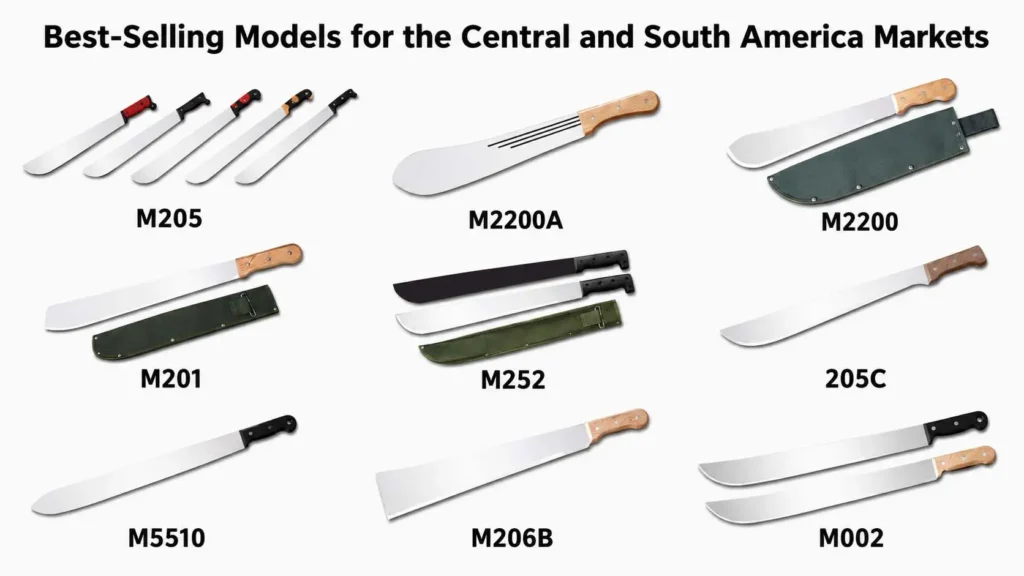
Budget constraints are real for many agricultural projects. Look for “value for money” rather than just the lowest price. The most cost-effective machetes are often standard Panga or Latin-style blades. These usually have simple wooden or plastic handles.
These tools are for high-volume use and are often seen as consumables. However, you must ensure they have proper heat treatment. A blade that cannot hold an edge will cost more in the long run. It leads to more downtime and more labor for sharpening. Buying in bulk directly from a factory is the best way to save money.
Scaling Your Business: Machete Bulk Order Discounts and Price Lists
Procurement managers must understand industry pricing tiers. A machete bulk order discount price list is based on volume. Orders starting at 1,000 to 5,000 pieces usually trigger discounts.
Negotiating Payment Terms for Large Orders
For large-scale procurement, payment terms are as important as the price. Ask about credit options or tiered payment schedules. This helps manage your company’s cash flow more effectively.
Providing Clear Specifications
Give suppliers clear specs for steel type, blade length, and packaging. Transparency in your annual volume helps in negotiating better rates. It protects your business from changes in raw steel prices. Always ask for a price list that includes FOB costs for your margins.
The Professional Choice: High-Performance Machetes for Forest Clearing
Standard tools may not be enough for forestry departments. A machete for forest clearing professional tool needs a thicker spine. Look for a thickness of 2.5mm to 3.0mm for denser plants.
Tools like the “Bolo” or “Parang” are better in these environments. Their weight-forward balance provides more chopping power. Professional tools also have superior tempering. This lets the blade flex without breaking when hitting hard timber knots.
Conclusion

Whatsapp : (+86 18830227232) E-mail : inquiry@ganzhedao.com