
Introduction
The Backbone of African Agriculture
Agriculture is the primary engine of the African economy. This is true from Ghana’s cocoa farms to Nigeria’s palm groves. It also applies to the sugarcane fields of South Africa. In these regions, the agricultural machete is an essential farming tool. B2B buyers and importers need reliable partners. Finding a good OEM machete manufacturer is not just about the price. It is about sourcing tools that can handle tropical farming. This guide explores how to select the right machetes for Africa.
Meeting the Standards of Tropical Farming
Tropical environments are very harsh on metal tools. High humidity and dense growth require superior steel. Importers must choose products that do not rust or break easily.
Q1-2: Choosing a Machete Wholesale Distributor in Africa and the Ideal Farming Size
Finding a machete wholesale distributor in Africa requires research. Local wholesalers look for partners who understand regional needs. They need to know about local soil and vegetation. A distributor is a vital bridge between the factory and the farmer. They ensure high-quality tools reach rural hubs.
Regional Preferences in Blade Length
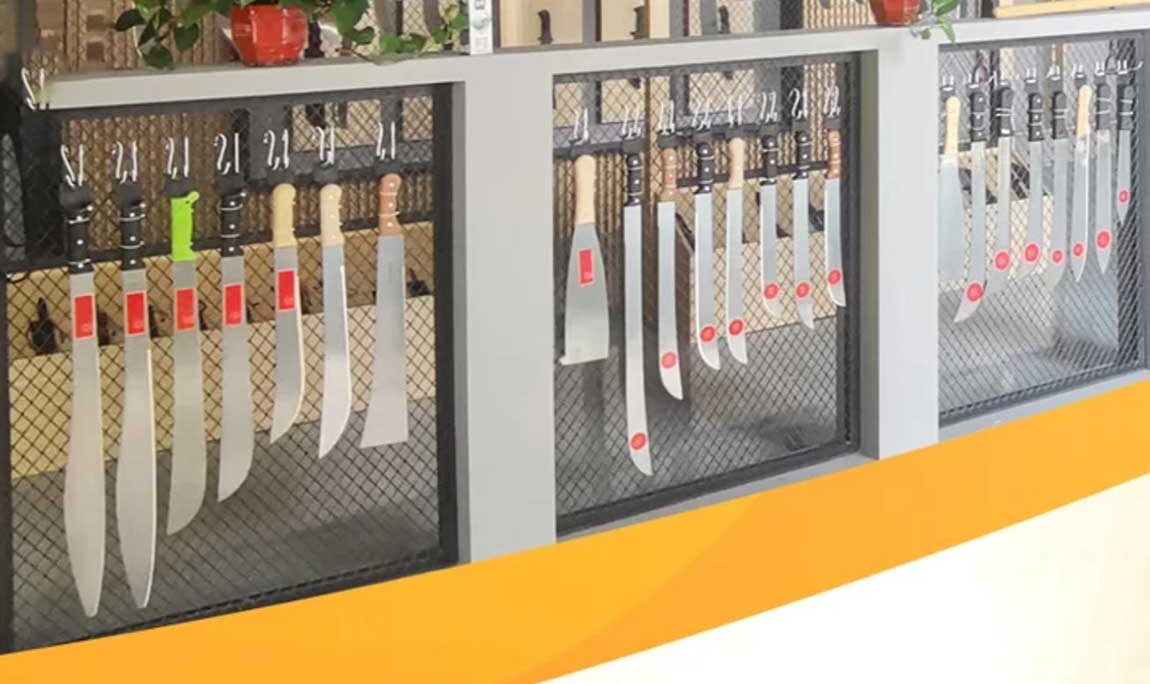
One common question is: what size machete is best for farming? In Africa, versatility is very important. Sizes range from 12 to 24 inches. The 18-to-22-inch range is the most popular “sweet spot.” A 20-inch blade provides enough reach for clearing tall grass. It is still light enough for all-day use. Shorter blades (12-14 inches) are better for precise pruning. Longer blades are best for heavy clearing tasks.
The Importance of Tool Weight
A tool that is too heavy will tire the farmer quickly. A tool that is too light will not cut effectively. Balance is the key to a productive workday.
Q3-4: The Best Tool for Palm Cutting and Material Comparison
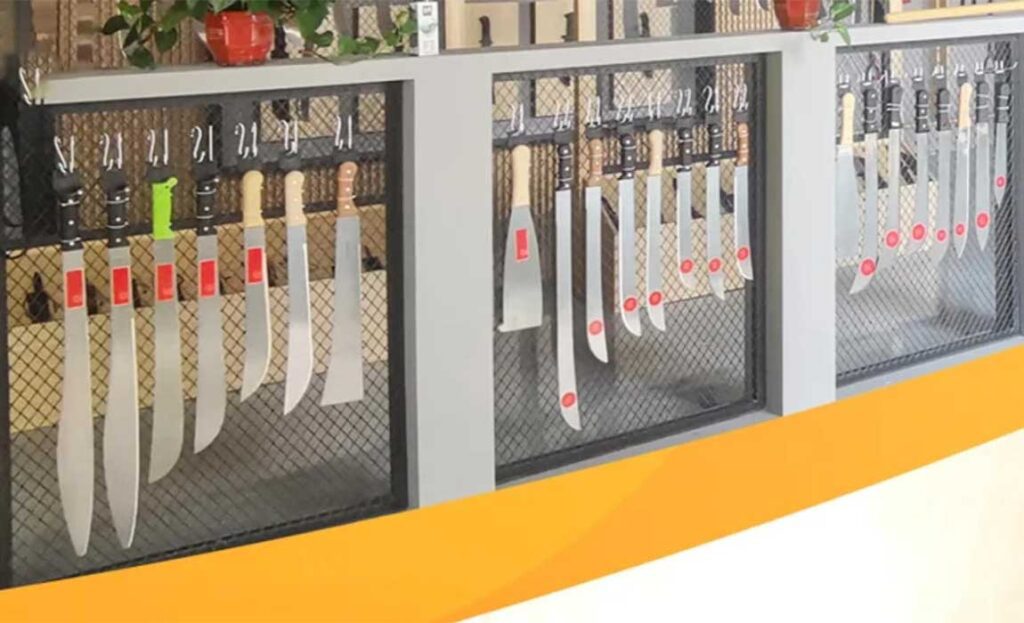
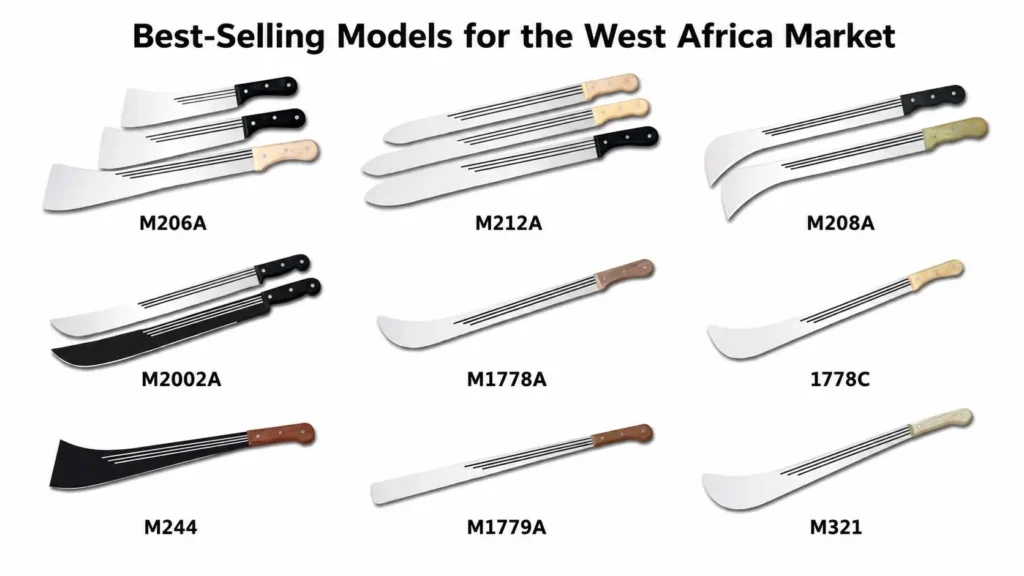
Oil palm cultivation is huge in West and Central Africa. The machete for palm cutting best tool is often the “panga.” Some also use “hook” style blades. These blades have a curved tip. This allows workers to hook and pull palm fronds easily. It also helps with harvesting fruit bunches. This specialized design increases harvesting efficiency a lot.
Why High-Carbon Steel Wins
A technical choice is carbon steel machete vs stainless steel. For professional farm use, high-carbon steel is the best. Carbon steel blades are tougher than stainless steel. They hold a much sharper edge for a longer time. This is critical when hacking through dense plants. Carbon steel can rust in humid areas. However, an OEM machete manufacturer can apply a protective varnish. Stainless steel is usually for casual gardening or survival. It lacks the durability needed for heavy agricultural work.
Q5: Navigating MOQ and Pricing with an Export Supplier
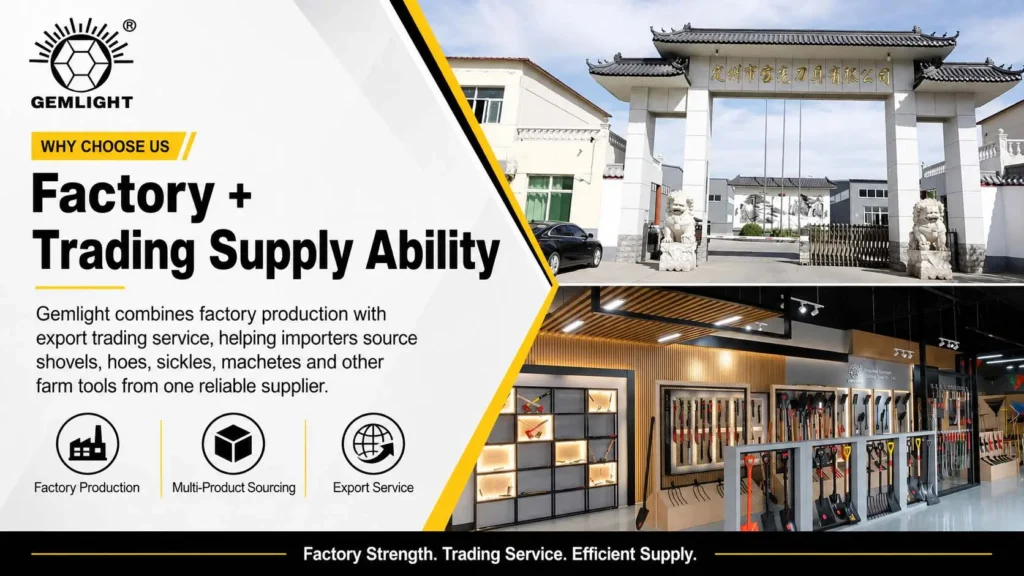
The biggest hurdle for many businesses is the machete export supplier MOQ low price balance. We know that B2B buyers in Africa need flexibility. High-volume orders give the lowest unit costs. However, we offer tiered MOQ structures to help regional distributors. We streamline our production lines to save costs. We also use bulk material sourcing. This lets us provide competitive factory pricing. We never compromise on the quality of the steel.
Port Logistics for African Importers
When evaluating a supplier, ask about their export logistics. They should handle shipments to major African ports like Lagos or Durban. Timely delivery is essential for the planting season.
Conclusion: Partnering for Agricultural Success
Sourcing the right agricultural machete requires technical knowledge. You also need a reliable supply chain. Choose an experienced OEM machete manufacturer. This ensures your inventory meets the high standards of African farmers. You might need specialized palm tools or general farming blades. In both cases, focus on quality carbon steel and ergonomic designs.
Whatsapp : (+86 18830227232) E-mail : inquiry@ganzhedao.com